1
Two turtles and a sun
The altar features a stone carving of two turtles and a sun. In colonial iconography, turtles symbolized the devout married woman devoted to her home.
The top of town · Barichara
A yellow-stone chapel, its plaza, and a sculpture park with canyon views, four blocks from the main square.
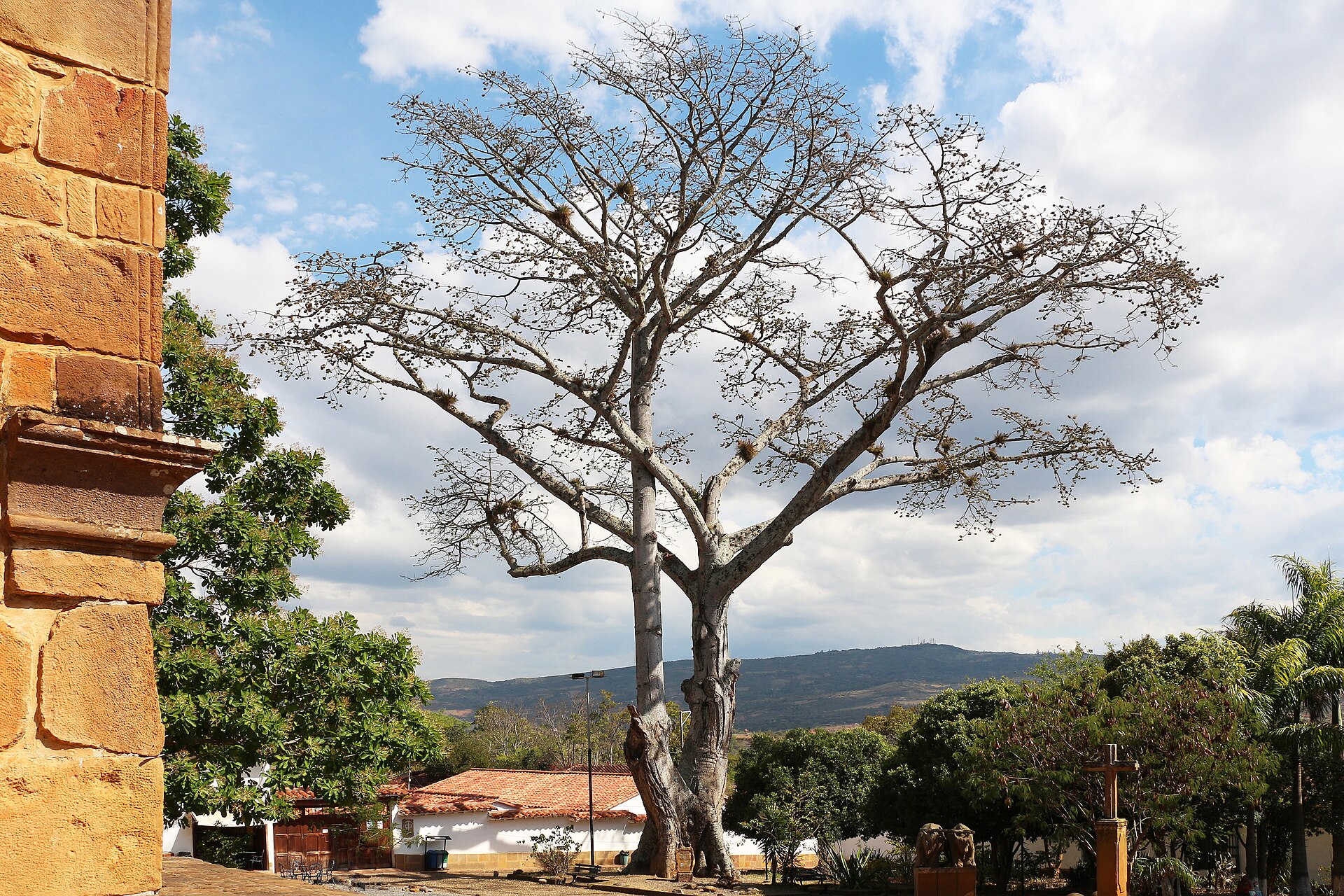
1 / 6 · The climb
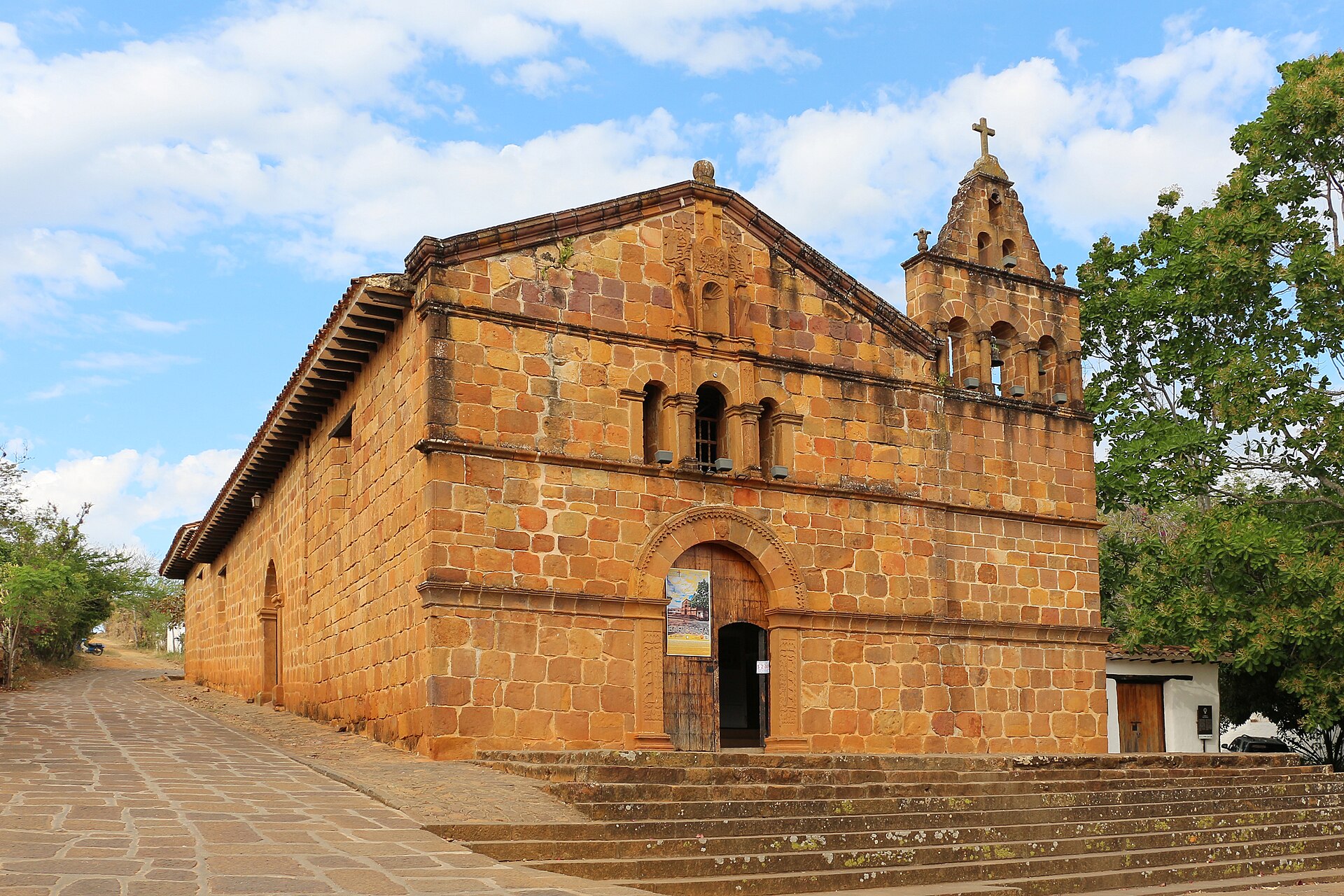
Four blocks from the main square, the plaza crowns Barichara.
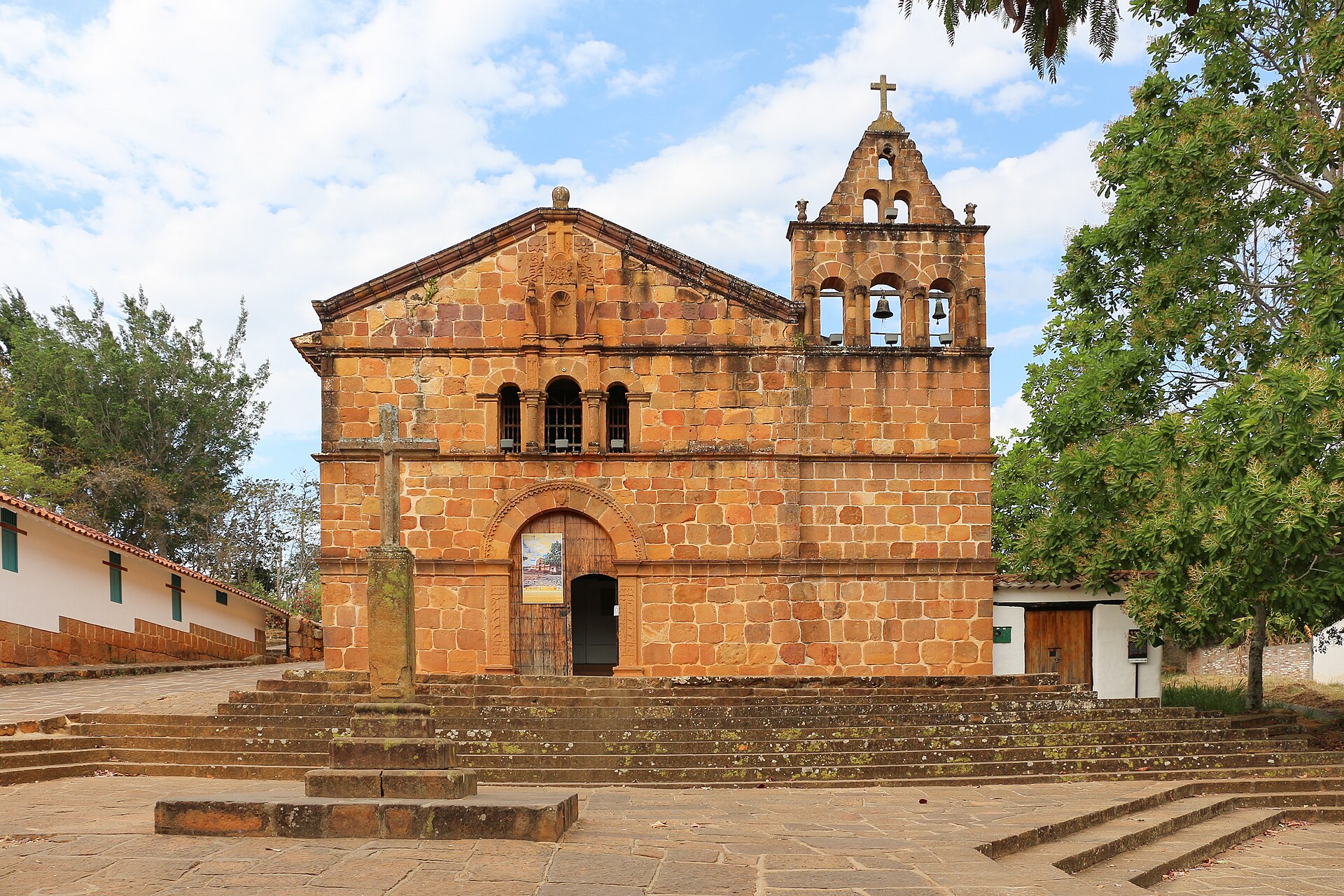
2 / 6 · The chapel
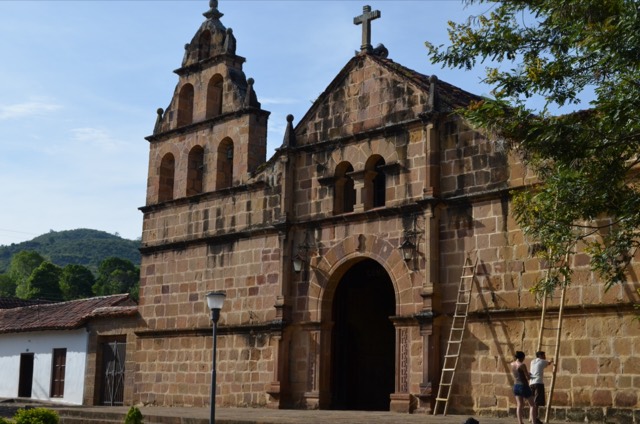
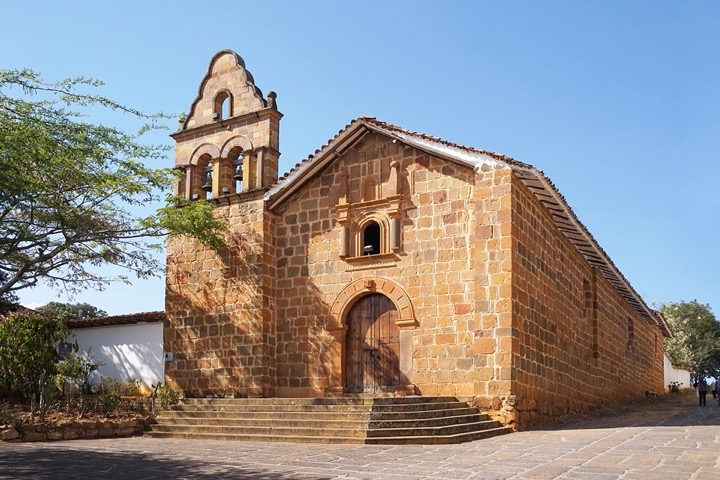
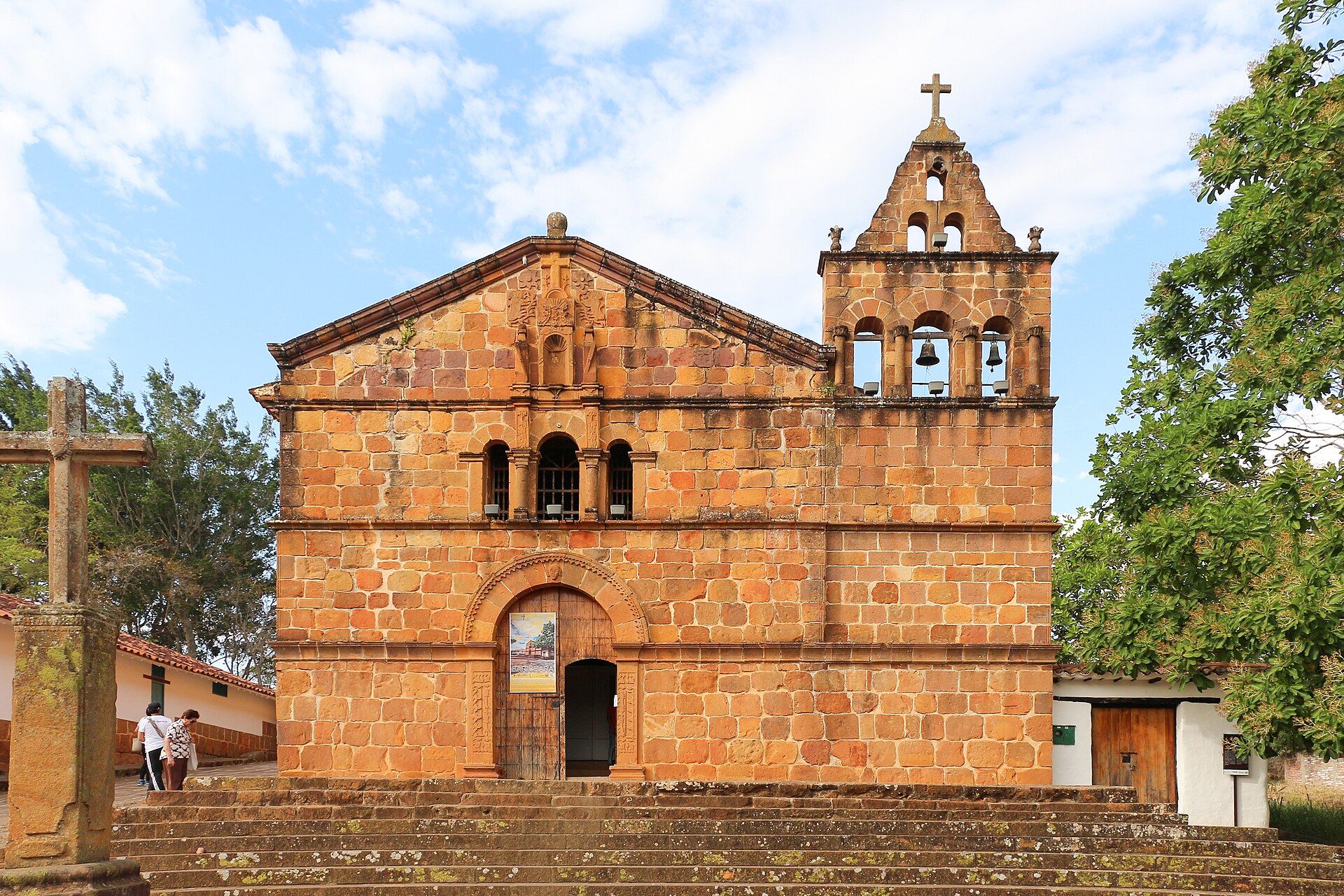
A Romanesque-style church with a single nave, a bell gable, and a bell tower.
3 / 6 · The bell gable
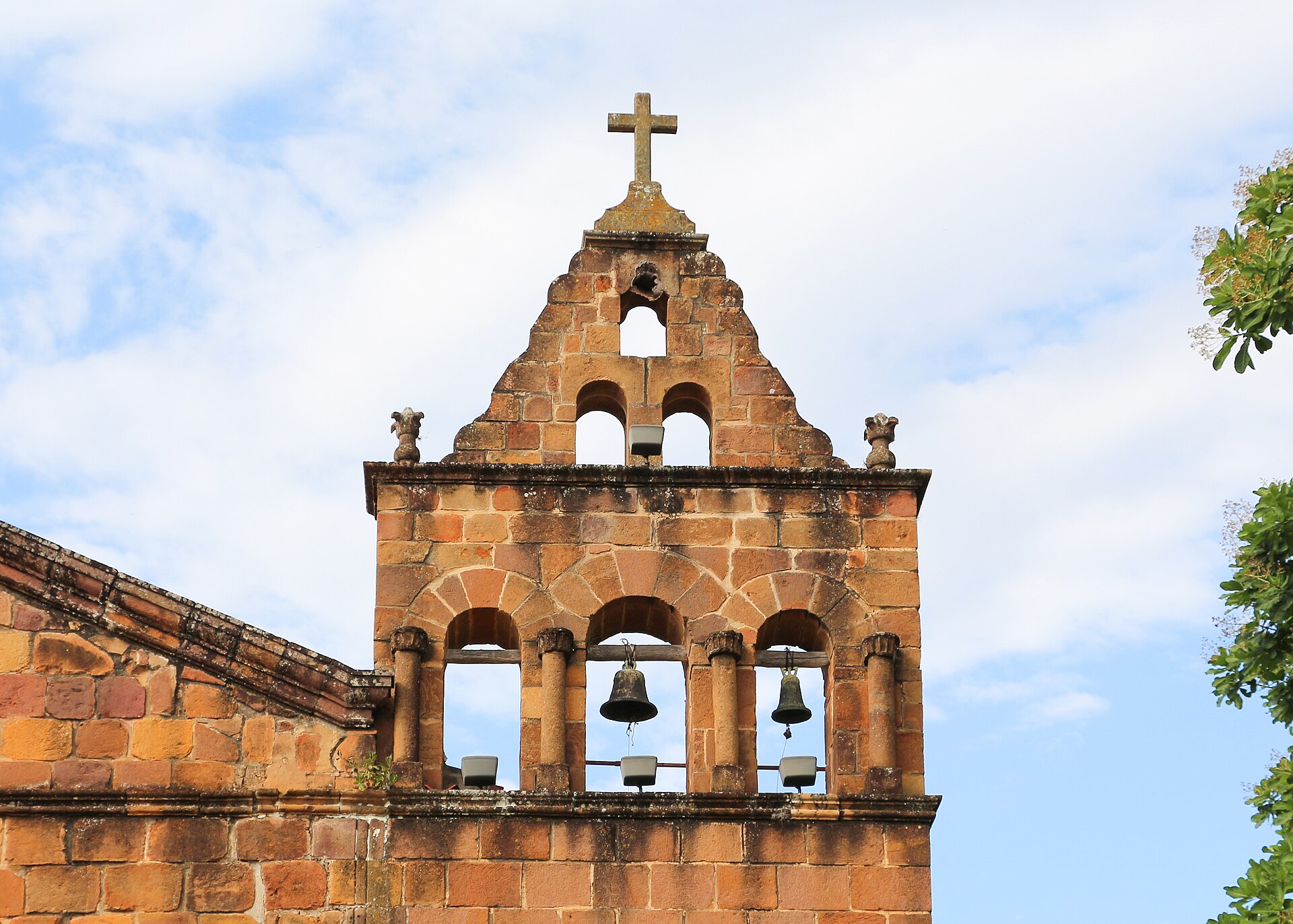
The façade is original; the interior was restored.
4 / 6 · Inside
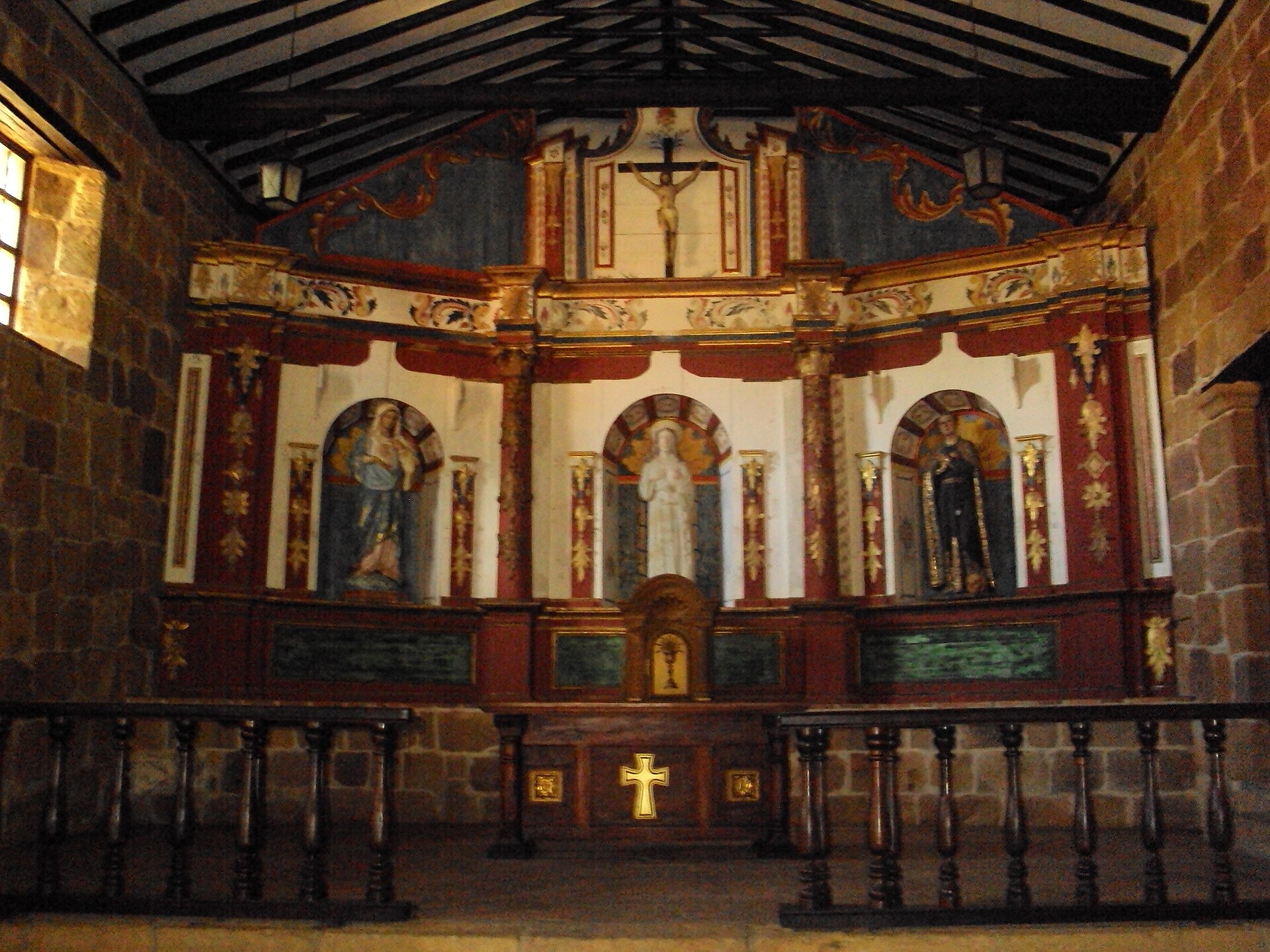
Polychrome, with gold leaf, arabesques, and inverted flowers. The chapel is currently closed for repairs.
5 / 6 · Next door
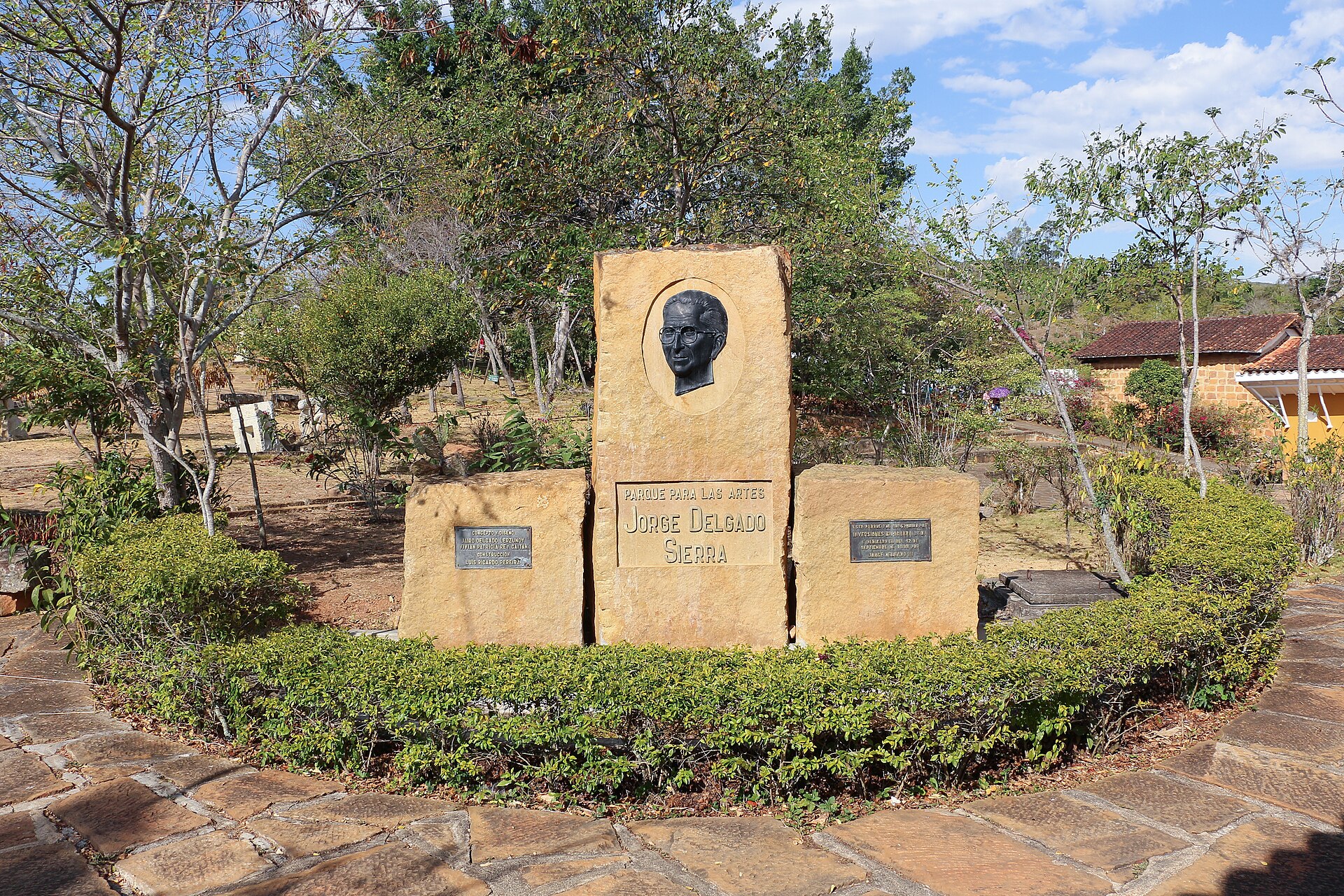
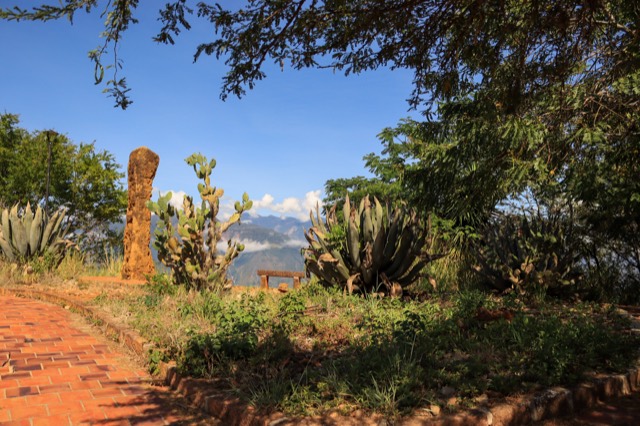
22 stone sculptures by artists from 11 countries, linked by a thin stream of water.
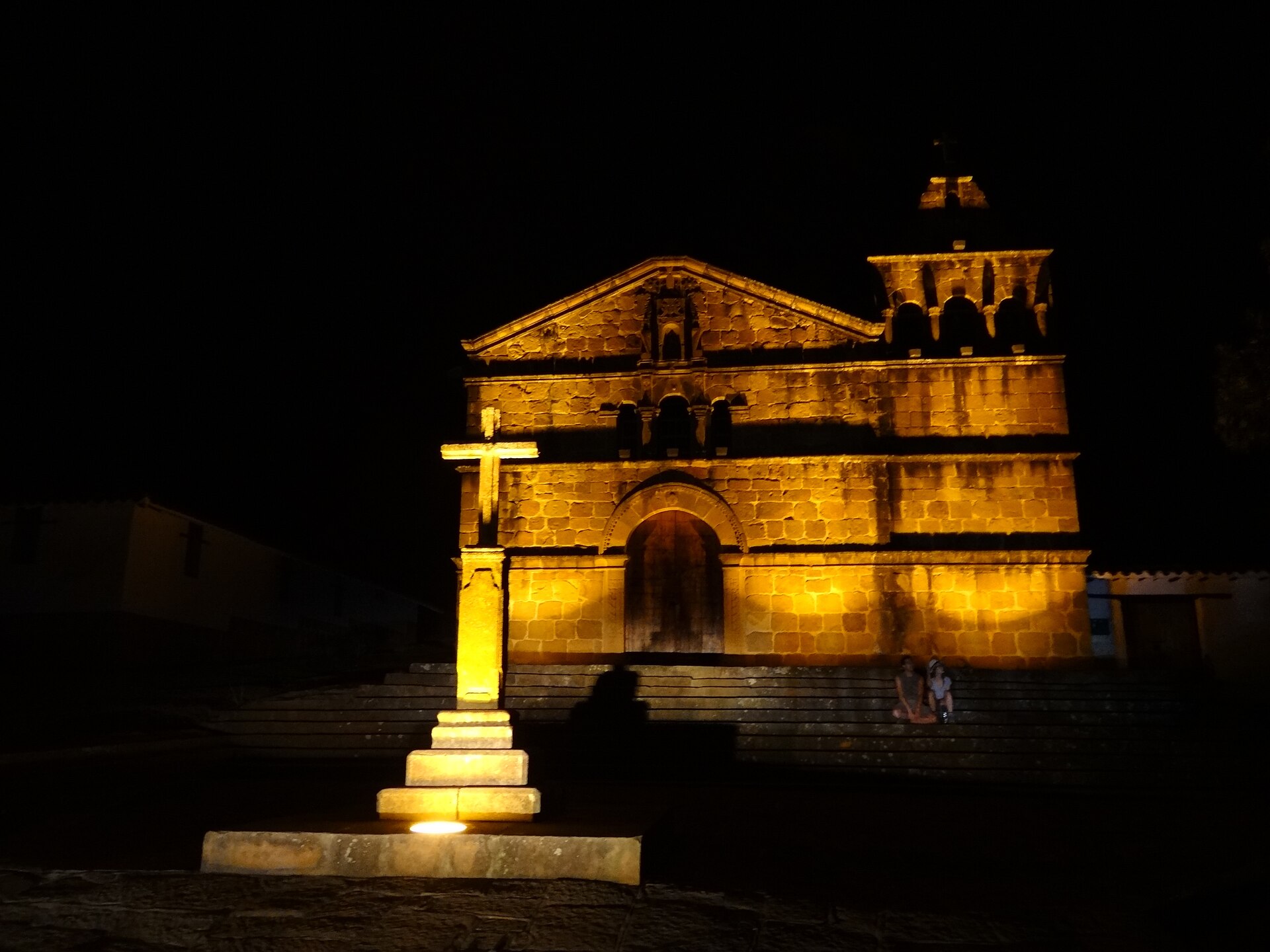
6 / 6 · By night
At nightfall, the yellow stone glows.
Good to know
Three free stops come together at the top of Barichara: Santa Bárbara Chapel, which may be the oldest in town; its small plaza; and the Parque para las Artes, with stone sculptures and a view of the Suárez River canyon. The chapel is closed inside, but you can still visit the façade, the plaza, and the park.
Chapel status: according to Vanguardia (November 2023), it has been closed since October 2022 due to structural problems and lost part of its roof. We couldn’t confirm a reopening for this guide. The façade, the plaza, and the Parque para las Artes are open to visitors.
The chapel
Its date is a small mystery, because sources disagree. The heritage blog Spoliarium says it was built in the 17th century as a mission chapel and appears to have been the town’s first chapel and founding site. Colombia’s Film Commission describes it as a late-17th-century Romanesque church built entirely of yellow stone. Vanguardia calls it “the 18th-century gem.” And inside, a loose stone bears the year 1800, when it was put into service.
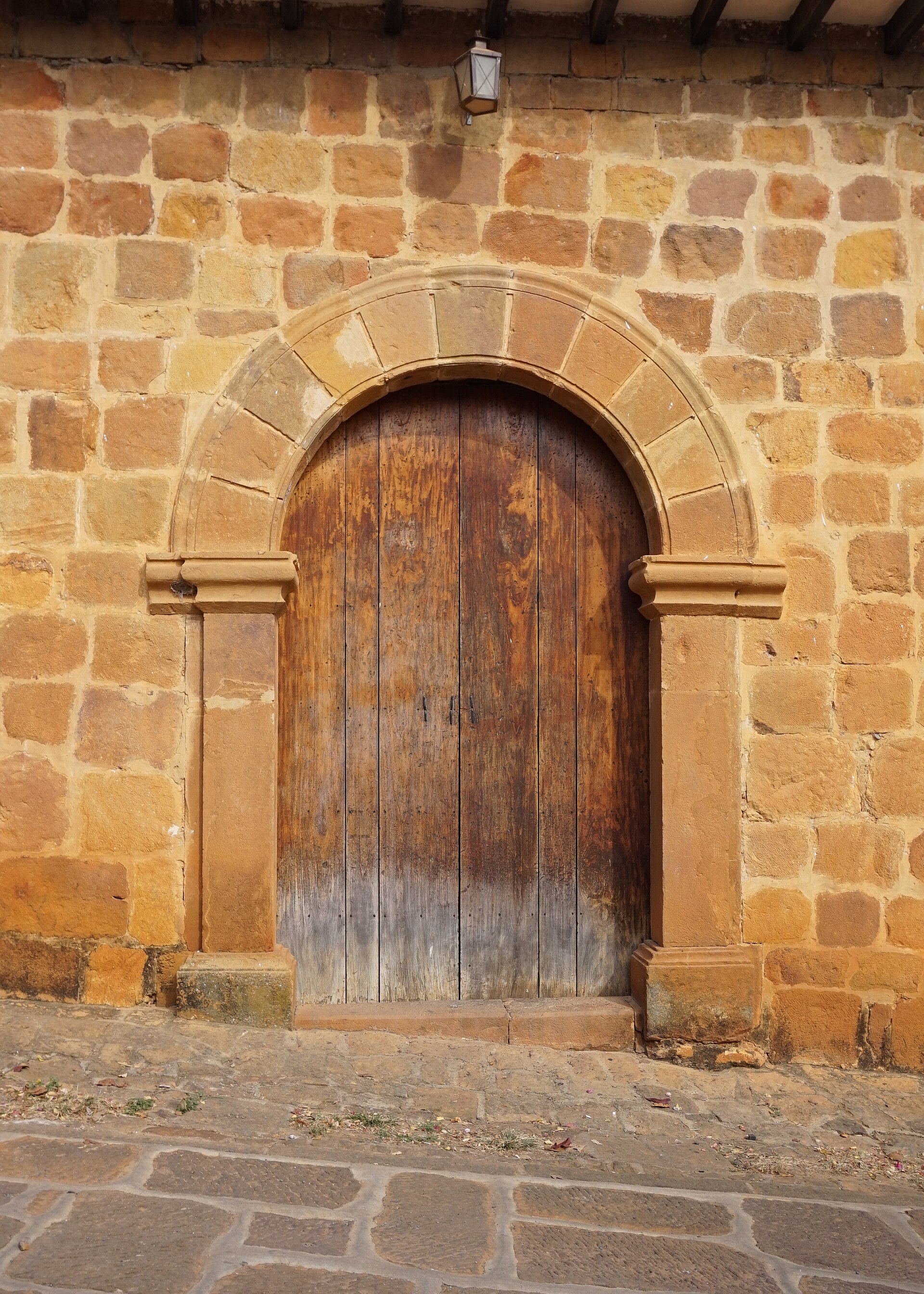
A single nave with a side entrance, a bell gable and bell tower, and a gabled roof with wooden beams. The façade is original; the interior was restored. Inside is a polychrome wooden altarpiece with gold leaf, arabesques, Moorish motifs, and inverted flowers, along with wooden images of Saint Barbara, Saint Gerard Majella, and Mary Help of Christians.
Colombia’s Ministry of Culture declared it a Cultural Heritage Site in 1978. Besides Mass, it has hosted weddings and exhibitions.
Parque para las Artes
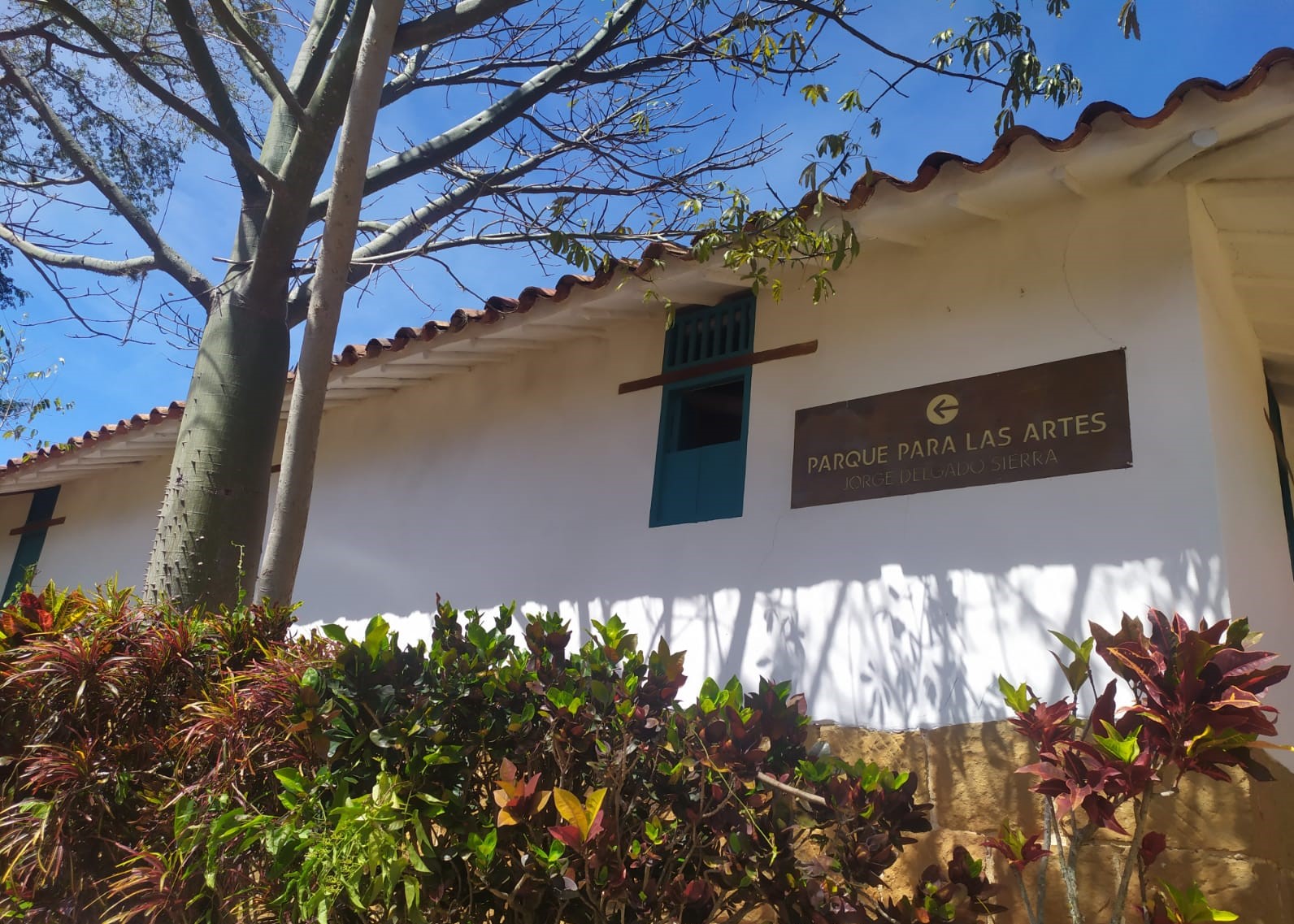
Just steps from the chapel is the Parque para las Artes Jorge Delgado Sierra, a tribute to the region’s signature craft: stone carving.
It brings together 22 sculptures by artists from the region and from 11 countries, including Colombia. They were created at stone-carving festivals held over a decade; after the last one, the park became the property of the José María Delgado foundation. Sources disagree on the year it opened: Saberes Patiamarillos says 1988, Vanguardia says 1998.
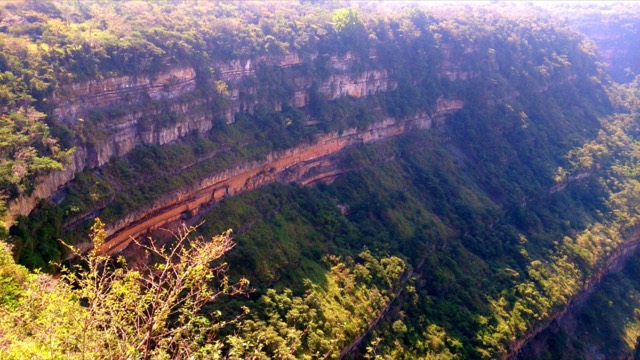
A small stream of water runs through each sculpture, linking them together. There are gardens with native plants, a small stone amphitheater used for dance, concerts, and theater, and a lookout over the Suárez River canyon. Admission is free.
History
According to Spoliarium, it was built as a mission chapel and may have been the town’s first.
The year carved on a loose stone inside: when the chapel was put into service.
Colombia’s Ministry of Culture declares it a Cultural Heritage Site.
The Parque para las Artes Jorge Delgado Sierra opens. Sources disagree on the year.
In October, the chapel closes due to structural problems; it later loses part of its roof.
Stories and fun facts
The altar features a stone carving of two turtles and a sun. In colonial iconography, turtles symbolized the devout married woman devoted to her home.
Sources place it between the 17th and 18th centuries, but inside, a loose stone is engraved with 1800.
In the Parque para las Artes, a thin stream of water runs through each sculpture and connects them.
The Camino Real to Guane starts near the chapel, so you can combine both.
Gallery
Tap a photo to see it full size.
Location
Message us and we’ll help you plan your visit to Santa Bárbara and the Parque para las Artes and pair it with other spots in Barichara.
Message us on WhatsAppSources
We only share what we could verify. When sources disagree, we say so. Accessed October 1, 2026.
pa-1: Bernard Gagnon · CC BY-SA 4.0 · Wikimedia Commons
pa-2: TatiMile · CC BY-SA 4.0 · Wikimedia Commons
sb-1: Bernard Gagnon · CC BY-SA 4.0 · Wikimedia Commons
sb-2: Bernard Gagnon · CC BY-SA 4.0 · Wikimedia Commons
sb-3: Bernard Gagnon · CC BY-SA 4.0 · Wikimedia Commons
sb-4: Bernard Gagnon · CC BY-SA 4.0 · Wikimedia Commons
sb-5: Bernard Gagnon · CC BY-SA 4.0 · Wikimedia Commons
sb-altar: Kamilokardona · CC BY-SA 3.0 · Wikimedia Commons
sb-noche: Kamilokardona · CC BY-SA 3.0 · Wikimedia Commons
sb-plazuela: Bernard Gagnon · CC BY-SA 4.0 · Wikimedia Commons
Licenses: CC BY-SA 4.0, CC BY-SA 3.0, or public domain (CC0), depending on the photo.